
By Dr. Sarah Dermody, NYC fellowship-trained facial plastic surgeon, main facial surgeon at Belcara Health
Buccal fat removal (also called bichectomy) is an outpatient facial surgery that removes a defined pocket of fat from the lower cheek to slim the midface and increase cheekbone definition. The incision is placed inside the mouth, so there is no external scar. The procedure is permanent, which is why candidacy evaluation matters more than it does for most aesthetic treatments.
At Belcara Health, Dr. Sarah Dermody leads facial surgery. She is an NYC fellowship-trained facial plastic surgeon (AAFPRS fellowship), with academic training at Georgetown University, Oxford University, and the University of Michigan, where she was Chief Resident. She applies a long-view assessment: how a result will look at 45 and 55, not only at the six-week post-op visit.
The page below covers what the procedure does and does not change, who is a good candidate at different ages, what happens on the day of surgery, a week-by-week recovery timeline, risks including the aging trajectory, before-and-after expectations, combination procedures, cost, and how to vet a surgeon for this specific operation.
Key Takeaways
What it is
Buccal fat removal is an outpatient surgical procedure that extracts the buccal fat pad through a small incision inside the cheek, slimming the midface. At Belcara Health in Baltimore, the procedure is performed by Dr. Sarah Dermody, the practice's main facial surgeon.
Recovery
Dr. Dermody reviews your recovery timeline, including diet and return to work, at consultation. Residual swelling settles over several months before the final contour is visible.
Results
Results are permanent because the buccal fat pad does not regenerate, but the long-term appearance depends on how natural facial volume loss with age interacts with the slimmer contour. Belcara's candidacy assessment evaluates this aging trajectory.
The procedure
The procedure is performed on an outpatient basis. Dr. Dermody explains the anesthesia plan and expected operating time at consultation.
Combining procedures
Buccal fat removal is commonly combined with chin augmentation or rhinoplasty in a single operative session. Facelift combinations are typically staged.
What is buccal fat removal and what does it do?
Buccal fat removal is a surgical procedure that extracts the buccal fat pad, a discrete pocket of fat that sits in the lower cheek between the cheekbone and the jawline. Everyone has a buccal fat pad, though the size varies substantially from person to person. The procedure is also referred to as bichectomy or buccal lipectomy in clinical literature.
The surgery is performed through a small incision made on the inside of the cheek, so no external scar is created. Dr. Dermody delivers the fat pad through the opening, removes a measured volume, and closes with dissolving sutures. The amount is deliberately limited. The goal is refinement of the midface, not aggressive hollowing.
What changes and what does not
After buccal fat removal, the lower cheek becomes slimmer and the cheekbone area appears more defined. The procedure does not alter jaw shape, bone structure, skin texture, or the upper face. Patients expecting a wholesale facial reshape should recalibrate before proceeding, because the change refines existing anatomy rather than reconstructing it.
Results are permanent. The buccal fat pad does not grow back after removal. However, natural aging brings its own volume changes to the face, and those changes interact with the surgical result over time, a topic covered in detail in the aging trajectory section below.

Are you a good candidate for cheek reduction surgery?
Good candidates for buccal fat removal have naturally full lower cheeks caused by a large buccal fat pad, not general facial fullness from recent weight gain or age-related volume loss. During consultation, a pinch test helps distinguish buccal pad fullness from subcutaneous fat (which liposuction addresses) or soft-tissue descent (where a facelift is the appropriate procedure).
Candidates should be at a stable, healthy weight. Weight loss after the procedure will further slim the face and can amplify the surgical result beyond what was planned. Realistic expectations are essential: the change is a refinement of existing facial structure.
Age-based candidacy: when is the right time?
Younger patients (generally under 18 to 20) are not optimal candidates. The buccal fat pad continues to slim naturally through the early twenties, and operating too early risks an overly hollow result once that natural maturation completes. Dr. Dermody generally advises waiting until facial anatomy is fully mature.
Patients in their mid-twenties through early forties are typically in the optimal window. Facial structure is stable at that stage, and natural volume loss has not yet begun in earnest. For patients in this range, the aging trajectory of a conservatively removed buccal fat pad tends to work with, rather than against, how the rest of the face matures.
Patients in their forties and beyond require a different conversation. Natural facial volume decreases with age, and a prior buccal fat removal can intensify midface hollowing at 50 or 55. For older candidates, Dr. Dermody evaluates whether a smaller partial removal might be appropriate, whether concurrent fat grafting to surrounding areas would protect long-term appearance, whether staging with a facelift makes sense when soft-tissue laxity is also a concern, or whether declining the procedure in favor of an alternative is the better recommendation.
Who should not have this procedure?
The honest contraindications for buccal fat removal are specific and worth stating clearly before anyone schedules a consultation.
- Patients with already-thin or naturally angular faces, because removing fat from a face with minimal pad volume risks an over-skeletonized appearance that worsens with age.
- Patients planning significant weight loss: post-weight-loss facial slimming compounds the surgical result unpredictably, so the procedure is best deferred until weight is stable.
- Patients with conditions affecting oral wound healing, including uncontrolled diabetes, active oral infection, or immunosuppressed status.
- Patients with unrealistic expectations about the degree of change, or whose goal is a result disproportionate to their existing anatomy.
Dr. Dermody will decline this procedure when the risk of an over-hollowed long-term result outweighs the near-term benefit, a judgment that requires in-person facial assessment, not a photo review.
What happens during buccal fat removal surgery?
The procedure is performed on an outpatient basis at Belcara Health's accredited surgical facility in Baltimore. Patients arrive on the morning of surgery, meet with the clinical team for final pre-operative review, and are typically home within a few hours of their start time.
Anesthesia depends on whether the procedure is isolated or part of a larger operative plan, such as a chin augmentation, rhinoplasty or facelift. Dr. Dermody discusses the appropriate approach in consultation based on the surgical plan and your medical history.
Arrival and pre-op
Vital signs are taken, the surgical plan is reviewed one more time, and anesthesia is placed according to the plan discussed at consultation.
Incision
A small opening is made on the inner cheek mucosa, inside the mouth, so no external scar results.
Fat pad delivery and removal
The buccal fat pad is gently separated from surrounding tissue, delivered through the incision, and the appropriate volume is removed.
Closure
The incision is closed with dissolving sutures that resorb inside the mouth over roughly two weeks.
Immediate recovery
Ice packs are placed, and the patient rests in the recovery area before discharge.
Discharge
A companion drives the patient home. Written instructions cover diet, oral hygiene, activity restrictions, and what to expect in the first 48 hours.
Buccal fat removal recovery: what to expect week by week
The milestones below describe a typical recovery pattern after isolated buccal fat removal. Dr. Dermody confirms your own timeline at follow-up. Individual recovery varies based on diet adherence, smoking status, overall healing capacity, and whether other procedures were performed in the same session.
Days 1 to 2
Expect swelling, tightness inside the cheeks, and mild soreness. A soft diet is essential at this stage: smoothies, broth, yogurt, or well-cooked soft foods. Ice packs are used as directed, and vigorous rinsing or spitting is avoided while the sutures establish.
Days 3 to 7
Swelling peaks around day 3, then begins to plateau. Dr. Dermody confirms when you can return to desk work. Strenuous activity remains restricted, and the soft diet continues.
Week 2
Dr. Dermody tells you when you can return to a normal diet. The dissolving sutures inside the cheek are usually fully resorbed by this point. Moderate activity resumes, with continued caution around chewing tough foods.
Weeks 3 to 4
External swelling visible to others typically resolves. The early result becomes visible, though residual internal swelling remains. Dr. Dermody clears strenuous exercise at follow-up.
Months 2 to 3
The majority of residual swelling resolves and the result stabilizes. Final contour continues to refine over 3 to 6 months as the tissues fully settle.
Specific practical guidance
No driving for 24 hours after any procedure involving anesthesia. Patients considering travel after surgery should plan on being locally available for at least the first week.
Risks and realistic outcomes of buccal fat removal
Buccal fat removal is a well-tolerated procedure in appropriately selected patients, but it carries specific risks that deserve honest discussion before any patient schedules surgery.
- Common risks include swelling and bruising, plus temporary numbness inside the cheek and minor asymmetry during the healing phase.
- Less common risks include infection, hematoma, and injury to the parotid duct or buccal branch of the facial nerve (both rare with an experienced facial surgeon).
- Serious, rare risks include excessive hollowing from over-resection, which is irreversible, and permanent facial nerve injury.
Excessive hollowing from over-resection is irreversible: the buccal fat pad does not regenerate, and restoring volume requires a separate, more complex procedure. Conservative volume removal is the single most important intraoperative decision for protecting long-term appearance.
The aging trajectory: how results change over time
The buccal fat pad contributes to midface volume. After removal, the lower cheek is permanently slimmer. Natural aging also depletes facial fat and bone density over time, which means the surgical result does not stay static: it interacts with how the rest of the face changes.
For patients in their twenties and thirties, the slimmer midface often improves with age as the surrounding face naturally becomes more sculpted. The procedure can grow into the face. For patients in their forties and beyond, or those with naturally thin faces at any age, the removal compounds natural volume loss, and the result at 50 or 55 may look more hollow than intended at 42.
Dr. Dermody's in-person assessment evaluates current facial volume, bone structure, and the patient's anticipated aging pattern to determine whether a full removal, a smaller partial removal, or an alternative approach is the right recommendation. This is not a reason to avoid the procedure for the right patient. It is a reason to choose a surgeon who thinks decades ahead rather than only to the next post-op visit.
What if you are not happy with your result? Revision and reversal options
Buccal fat removal cannot be literally reversed because the removed fat pad does not regenerate. However, excessive hollowing can be addressed through volume restoration techniques: most commonly autologous fat grafting, in which fat is harvested from elsewhere on the patient's body and transferred to the midface. Dermal fat grafting is a related option that uses a composite skin-and-fat graft.
These correction procedures are more technically demanding than the original surgery, and they are best performed by a facial surgeon experienced in both removal and volume restoration. Prevention through careful patient selection is preferable to revision at any stage, which is why Belcara invests time in candidacy evaluation before recommending the procedure in the first place.
Buccal fat removal before and after: what results look like at Belcara
Patient outcomes vary. The degree of visible change depends on the original size of the buccal fat pad: patients with larger pads see more pronounced midface slimming, while those with moderate pads see a subtler refinement that photographs well in profile but is less obvious head-on. The result is permanent in the sense that the removed tissue does not return.
During consultation at Belcara Health in Baltimore, Dr. Dermody can show representative before-and-after cases from patients with similar anatomy and goals. In-person review allows the surgeon to point out the specific anatomical features that drove each surgical plan, which is more informative than a static gallery. All patient images shown during consultation are released with documented HIPAA-compliant authorization.

Combining buccal fat removal with other facial procedures
Buccal fat removal is frequently combined with other facial procedures when the surgical plan calls for broader midface or lower-face balance. The decision of what to combine in a single operative session versus what to stage depends on operative time, anesthesia planning, and the recovery profiles of the component procedures.
Common combinations and typical sequencing at Belcara Health
Combination | Typical approach | Clinical rationale |
|---|---|---|
Chin augmentation | Same session | Chin augmentation and buccal fat removal have aligned recovery timelines, and the combination addresses midface slimming plus lower-face projection together. |
Rhinoplasty | Same session | Addresses midface and nasal harmony in one operative plan, with coordinated anesthesia. |
Botox or filler | Same session or shortly after | Non-surgical refinements can be added without extending the surgical recovery. |
Facelift or neck lift | Typically staged | Longer operative time, dedicated anesthesia planning, and a different recovery profile. Often staged for patients where soft-tissue laxity is a parallel concern. |
Combining procedures does not inherently reduce risk or improve any specific outcome. The rationale for combination is efficiency of recovery and coordinated planning when the patient's goals span multiple areas. For patients considering combinations, Dr. Dermody evaluates the specific combination and recommend a sequencing plan during consultation. Links from this page to the chin augmentation, rhinoplasty, and facelift treatment pages provide the detailed clinical overview of each component procedure.
How much does buccal fat removal cost?
Buccal fat removal pricing at Belcara Health is provided at consultation and is based on the specific surgical plan: whether the procedure is isolated or part of a combined operative session with other facial procedures.
Belcara's pricing philosophy
Belcara Health provides an all-in quote at consultation covering the surgeon fee, anesthesia fee, facility fee, pre-operative testing, and standard follow-up appointments. There are no surprise charges. What is not included: revision surgery if ever needed, extended aftercare beyond standard, and any non-standard pathology or complication care.
Financing options may be available. The specific plans and terms are reviewed at consultation. The fee reflects the expertise of the operating surgeon, the standards of the accredited facility, and the post-operative access Belcara provides, not the lowest available price in the Baltimore market.

How to choose a surgeon for buccal fat removal
The checklist below is specific and practical. It is the same framework a facial surgeon would apply when referring a family member.
At Belcara Health, Dr. Sarah Dermody is an NYC fellowship-trained facial plastic surgeon (AAFPRS fellowship) with academic training at Georgetown, Oxford, and Chief Resident training at the University of Michigan.
- Confirm the surgeon's facial plastic surgery training. Ask where the surgeon completed residency and fellowship, and whether the fellowship was dedicated to facial plastic and reconstructive surgery. A weekend course is not surgical training.
- Confirm facial surgery is a primary focus of the practice. Training alone is not enough. Ask what percentage of the surgeon's practice is facial procedures, and avoid a surgeon who offers buccal fat removal as an occasional add-on to a body-focused practice.
- Evaluate before-and-after portfolios critically. Look for a range of patients with different starting anatomies, not only ideal-result cases. Ask how old each photo is and whether results are shown at 6 or more months post-op, when swelling has fully resolved.
- Ask about candidacy evaluation and the aging trajectory of your specific face. A surgeon who agrees to operate without a careful in-person assessment, and without discussing how the result will look in 10 or 20 years, is not applying the standard of care for an irreversible facial procedure.
- Confirm the surgical facility is accredited. At Belcara Health, buccal fat removal is performed in a fully accredited surgical facility in Baltimore with a dedicated anesthesia provider.
The Belcara Health approach to facial contouring
Belcara Health has served the Baltimore region since 1997. Patients build decades-long relationships with the practice, which means the operating surgeon is accountable for how a result ages, not only how it looks at the six-week post-op visit. For a permanent facial procedure like buccal fat removal, that long-view accountability is the single most important factor in candidacy judgment.
Dr. Sarah Dermody leads facial surgery at Belcara as the main facial surgeon. She completed her AAFPRS fellowship in New York City, and her academic training spans Georgetown University, Oxford University, and the Chief Resident position at the University of Michigan. Her clinical approach combines technical precision with an artistic focus on natural, patient-centered results.
Belcara's integrated care environment means that patients considering buccal fat removal have access to the broader wellness team for perioperative support: nutrition counseling, hormone evaluation, and recovery-focused services. The practice's position on buccal fat removal is clear: this is a procedure for a specific subset of patients, evaluated rigorously, and recommended conservatively.
Request a consultation with Dr. Dermody: A consultation includes an in-person evaluation of your facial anatomy, a candidacy discussion that accounts for your anticipated aging pattern, a review of the surgical plan if the procedure is appropriate, and an all-in financial quote. Call Belcara Health in Baltimore or submit an inquiry through the website.

Your consultation and next steps at Belcara Health
A buccal fat removal consultation at Belcara Health covers in-person evaluation of facial anatomy (pinch test, bone structure assessment), a review of candidacy criteria at your specific age and anatomy, honest discussion of realistic outcomes and the aging trajectory, review of the surgical plan if the procedure is recommended, and a walk-through of the financial investment.
What to bring: any prior facial surgery records, a list of current medications and supplements, and questions written in advance. Patients traveling to Baltimore from outside the region can begin with a virtual consultation. An in-person visit is required before any surgical plan is finalized.
The consultation is a two-way evaluation. If Dr. Dermody does not recommend buccal fat removal for your specific case (because of candidacy, aging trajectory, or a better alternative), she will say so clearly and explain what might better address your goals. The practice does not rush patients toward surgery.
Request a consultation: Call Belcara Health in Baltimore or submit an inquiry through the website. A member of the clinical team will contact you to schedule.

Financing & Payment Options
Belcara Health has a dedicated financing department that helps patients arrange financing for elective procedures. Approval and terms are set by each lender.



ConfidencebeginsHERE
Our surgeon who performs buccal fat removal in Baltimore

Learn more
Contact Belcara Health to learn how buccal fat removal could fit your goals.
- Schedule your private consultation by calling 410.296.0414 or contact us online.
- See current patient resources.
- Read the Belcara Health blog for more on plastic surgery and other services.
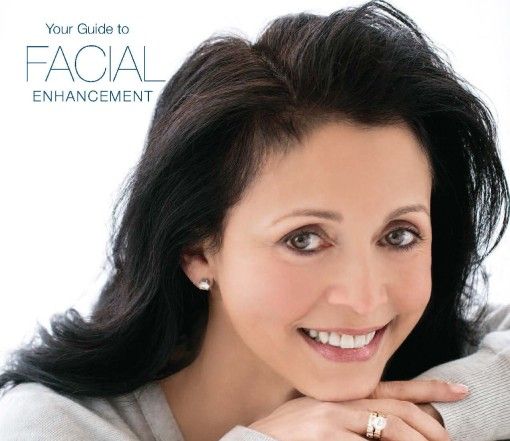
Your Guide to Facial Enhancement
Want to learn more before you schedule a consultation? Our free procedure guides explain what to expect, from your first visit through recovery.
Frequently Asked Questions
Am I a good candidate for cheek reduction surgery?
Good candidates have naturally full lower cheeks caused by a large buccal fat pad, are at a stable healthy weight, and have realistic expectations about the degree of change. A pinch test during consultation helps distinguish buccal fat pad fullness from subcutaneous fat or soft-tissue descent. At Belcara, candidacy evaluation also accounts for how the result will appear decades later.
Is buccal fat removal permanent?
Yes. The buccal fat pad does not regenerate after removal, so the slimmer midface contour is permanent. The long-term appearance depends on how natural facial aging interacts with the slimmer contour, which is why Dr. Dermody evaluates the anticipated aging trajectory during consultation before recommending the procedure for any patient.
What are the risks of aging after buccal fat reduction?
As natural facial volume decreases with age, a prior buccal fat removal can intensify midface hollowing. The risk is greatest for patients who were already thin-faced at the time of surgery or who had the procedure in their forties or later. At 50 or 55, the result may look more hollow than intended. Belcara's pre-operative assessment evaluates this specific trajectory.
How does buccal fat removal differ from cheek liposuction?
Buccal fat removal extracts a discrete anatomical fat pad located inside the cheek through an intraoral incision. Cheek liposuction removes subcutaneous fat from outside the cheek through an external incision. They address different tissue layers at different depths. The appropriate choice depends on where the fullness originates: a question best answered by in-person assessment.
Do you have before-and-after photos of buccal fat removal?
Belcara Health reviews representative before-and-after cases during consultation. In-person review allows Dr. Dermody to point out the anatomical features that drove each surgical plan, which is more informative than a static gallery. All patient images are released with documented HIPAA-compliant authorization and were photographed under standardized conditions without filters or lighting changes.
How much does buccal fat extraction cost at Belcara Health?
Belcara provides an all-in quote at consultation covering surgeon fee, anesthesia, facility fee, and standard follow-up appointments, with no surprise charges.
What happens during buccal fat removal surgery?
A small incision is made inside the cheek, the buccal fat pad is gently delivered and partially removed, and the incision is closed with dissolving sutures. No external scar results. The procedure is outpatient, and Dr. Dermody explains the anesthesia plan and expected operating time for your case at consultation.
How long is recovery after buccal fat removal?
Swelling and tightness inside the cheeks are strongest in the first days and settle over the following weeks. A soft diet comes first, and Dr. Dermody tells you when you can return to normal food, desk work and exercise based on how you are healing. Residual swelling continues to settle for several months before the final contour is visible.
Can buccal fat removal be reversed?
The fat pad itself cannot be replaced once removed because it does not regenerate. However, excessive hollowing can be addressed with autologous fat grafting: transferring the patient's own fat from elsewhere on the body to restore midface volume. This correction procedure is more complex than the original surgery, which is why candidacy evaluation upfront matters.
What age is too young or too old for buccal fat removal?
Most facial surgeons recommend waiting until the early twenties because the buccal fat pad continues to slim naturally through adolescence. For patients in their forties or later, the risk of compounded midface hollowing with age is higher. Dr. Dermody evaluates each patient's specific anatomy and anticipated aging pattern rather than applying a fixed age cutoff.
Can buccal fat removal be combined with other procedures?
Yes. Buccal fat removal is commonly combined with chin augmentation or rhinoplasty in the same operative session because recovery timelines align. Non-surgical treatments like Botox or filler can be added as well. Facelift combinations are typically staged over separate sessions due to longer operative time and different recovery profiles.
How much fat is actually removed during the procedure?
The amount depends on the size of your buccal fat pad and your facial structure, and Dr. Dermody plans a deliberately limited removal. The goal is midface refinement, not hollowing. Over-resection is a recognized risk, and conservative removal protects the long-term appearance of the face as it ages.
What are the risks and complications of buccal fat removal?
Common risks include swelling and bruising, plus temporary numbness inside the cheek. Less common risks include infection, hematoma, and injury to the parotid duct or buccal branch of the facial nerve. The most significant long-term concern is excessive hollowing from over-resection, a risk that increases as the face naturally loses volume with age.
How do I choose a qualified surgeon for buccal fat removal?
Confirm the surgeon completed residency and fellowship training focused on facial plastic surgery. Confirm facial surgery is a primary focus of the practice. Review before-and-after portfolios at 6 or more months post-op. Ask whether the surgeon discusses the aging trajectory of results during candidacy evaluation. The surgical facility should be fully accredited.
About this page
Written by: Dr. Sarah Dermody, for patients, from the sources listed here.
Medically reviewed by: Dr. Sarah Dermody, NYC fellowship-trained facial plastic surgeon
Last reviewed: October 2026
Next scheduled review: October 2027, or sooner if guidance or the evidence changes.
Sources
- U.S. Food & Drug Administration (FDA)
- American Society of Plastic Surgeons (ASPS)
- American Board of Plastic Surgery (ABPS)
- American Society for Aesthetic Plastic Surgery (ASAPS)
- Davis B, Serra M. Buccal Fat Pad Reduction.. 2022.
- Espinosa Reyes JA, Camacho Triana JG. Buccal Fat Reduction: Indications, Surgical Techniques, Complications.. Facial plastic surgery clinics of North America. 2022.
- Traboulsi-Garet B, Camps-Font O, Traboulsi-Garet M, Gay-Escoda C. Buccal fat pad excision for cheek refinement: A systematic review.. Medicina oral, patologia oral y cirugia bucal. 2021.
- Lee TS, Park S. Use of Pedicled Buccal Fat Pad for Midface Augmentation.. The Journal of craniofacial surgery. 2017.
- Zhu C, Li F, Tang X, Cai L, Yin B, Zhang X, Jiang C, Han X. Buccal Fat Pad Augmentation for Midfacial Rejuvenation: Modified Fat Grafting Technique and Ogee Line Remodeling.. Aesthetic surgery journal. 2024.
- Kablan FK. The Reliability of Free Buccal Fat Graft for Treatment of Severe Gingival Recessions at Mandibular and Maxillary Exposed Roots.. Annals of maxillofacial surgery. 2018.
Information on this page is for educational purposes and is not medical advice.
Expert InsightDelivered to Your Inbox
Sign up for the Belcara Health Newsletter
Stay current on innovations in aesthetics and wellness, Belcara events and new offerings.